AMIR Heydari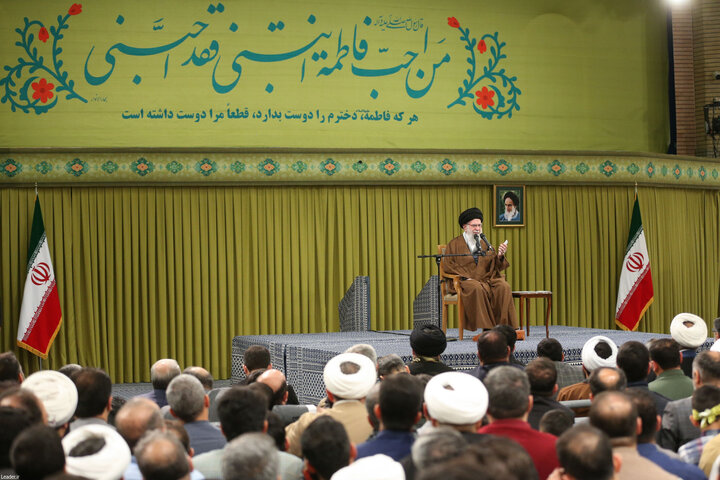
Iran commemorated the birth anniversary of Lady Fatima al-Zahra with nationwide celebrations on Thursday, as thousands of eulogists gathered at the Imam Khomeini Hosseiniya in Tehran for a ceremony attended by the Leader of the Islamic Revolution Ayatollah Seyyed Ali Khamenei. The event, featuring nearly three hours of eulogies, poetry, and religious recitations, highlighted the revered status of Lady Fatima al-Zahra and underscored her virtues as a model for Muslim society.
Ayatollah Khamenei congratulated the nation on the auspicious occasion and stressed that the Iranian people have thwarted long-standing attempts by foreign adversaries to alter the country’s “religious, historical, and cultural identity.” He said Iran continues its forward momentum despite ongoing economic challenges and shortages, provided that the country maintains proper defensive and offensive readiness in the face of media and psychological campaigns targeting “minds, hearts, and beliefs.”
He emphasized the spiritual and moral virtues of Lady Fatima al-Zahra and called on society to embody her model in faith, justice-seeking, explaining Islamic principles, family life, and social responsibility.
Highlighting the cultural significance of religious eulogies, Ayatollah Khamenei described the tradition as a powerful form of expression that reinforces the “literature of resistance.” He noted that any idea lacking proper cultural and literary articulation risks fading, and argued that eulogists and religious gatherings have played a critical role in shaping and transmitting concepts of resistance across generations.
The Leader defined “national resistance” as the capacity to withstand various forms of foreign pressure—including military, economic, political, and media pressures. He referenced the Western governments’ “hype and psychological warfare,” asserting that such tactics are aimed at imposing political influence, controlling natural resources, or altering nations’ lifestyles and identities.
Ayatollah Khamenei said global powers have sought for over a century to reshape Iran’s identity, but the Islamic Revolution reversed those efforts, and the Iranian people have continued to resist pressure in the decades since. He added that the concept of resistance has expanded beyond Iran to other regional nations.
He warned that today’s confrontation goes beyond military threats, describing Iran as being in the “center of a media and propaganda war.” According to him, adversaries have realized that Iran cannot be subdued militarily and have therefore intensified efforts through information campaigns. Some parties, he said, deliberately attempt to create fear by repeatedly raising the possibility of renewed military conflict—efforts he insisted would fail.
Ayatollah Khamenei identified the primary objective of Iran’s adversaries as erasing the legacy of the Islamic Revolution and diminishing the memory of Imam Khomeini. He named the United States as the central actor in this “broad and active front,” with certain European governments and mercenaries operating on its periphery.
He called for a strategic understanding of the enemy’s goals and “formation,” urging institutions and cultural actors to focus their efforts on the areas being targeted—namely Islamic, Shia, and revolutionary teachings. He described resistance against Western media warfare as difficult but achievable, emphasizing the responsibility of eulogists and religious groups to strengthen young people against hostile messaging.
The Leader advised eulogists to promote religious knowledge and lessons from the lives of the Shia Imams, counter misinformation while exposing adversaries’ weaknesses, and explain Quranic concepts related to personal, social, and political conduct.
MNA