AMIR Heydari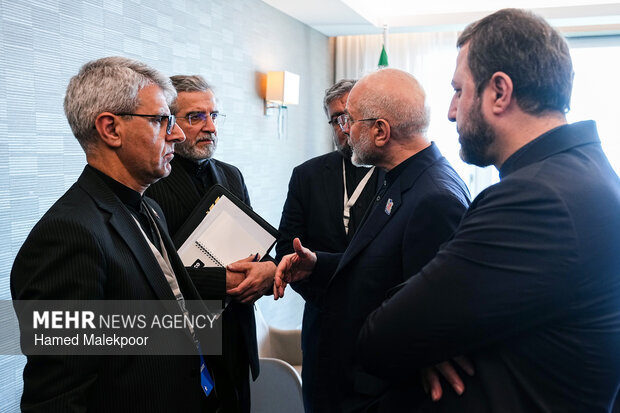
In a diplomatic development that could mark a turning point in regional and international equations, yesterday’s multilateral talks at the Burgenstock estate in Switzerland focused on implementing the provisions of the preliminary understanding and determining practical mechanisms to follow up on future demands. These discussions come as a memorandum of understanding on ending the war between Iran and the United States has recently been signed by the presidents of the two countries.
Against sensitive and turbulent situation that has taken shape around Lebanon due to Israeli ceasefire violations, the five key points of the statement issued by the Media Committee of the “Minab 168” negotiating delegation (Iranian team) provide a clear picture of the achievements and the path ahead in these fateful talks:
According to the Media Committee of the “Minab 168” negotiating delegation, the key points from Sunday’s multilateral talks are as follows:
1. Due to the pressure exerted by the Iranian negotiating delegation since Saturday evening, the fragile cessation of hostilities in Lebanon is currently being maintained. To stabilize this, a monitoring mechanism named the conflict control unit will be established with Iran’s participation. Through this mechanism, the Islamic Republic of Iran effectively and officially enters Lebanon’s security equations, whereas in recent months, the Americans made considerable efforts to exclude Iran from Lebanon’s equations. The Israeli regime has no position within this mechanism.
2. Regarding the management of the Strait of Hormuz and guaranteeing its gradual reopening, it was agreed that a contact line would be established so that the other side can contact Iran in case of implementation issues and convey any possible problems. This development signifies the consolidation of Iran’s sovereignty over the Strait of Hormuz.
3. The three working groups on nuclear issues, sanctions, and monitoring, which are to be formed according to the statement, will commence their work after the implementation of clause 13 of the memorandum of understanding begins, namely, the cessation of fire on all fronts, particularly in Lebanon, the commencement of the lifting of the naval blockade, the commencement of the release of Iran’s blocked assets, and the issuance of waivers for (the removal of) oil, petrochemical, and derivatives sanctions. In effect, prior to the implementation of clause 13, the Islamic Republic will not enter the final stage of negotiations.
4. In this round of talks, a memorandum of understanding regarding the implementation of the release of Iran’s blocked assets was also signed between Iran and Qatar.
5. During the Switzerland talks, based on clause 10 of the memorandum of understanding, the US Treasury Department’s Office of Foreign Assets Control (OFAC) issued documents for the removal of oil, petrochemical, and derivatives sanctions for a period of 60 days. This means that Iran can officially sell oil to its customers and receive its payment through the official mechanisms of the Central Bank.
Reported by Mohaddeseh Pakravan