AMIR Heydari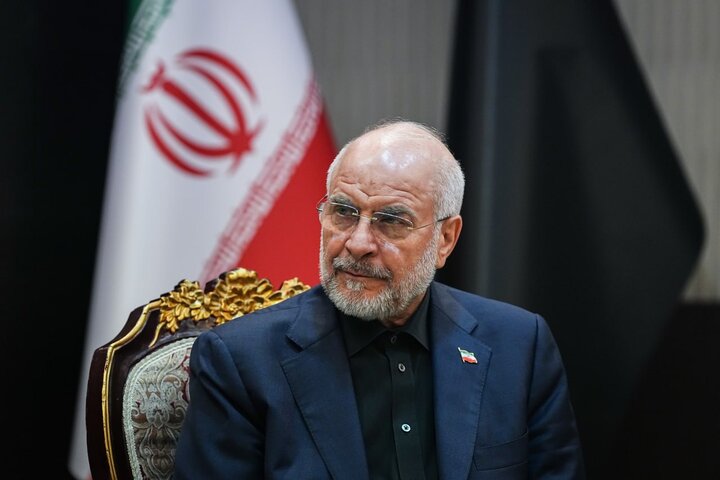
In a message addressed to the Iranian nation released on Wedensday evening, the head of the Iranian negotiating team parliament speaker Ghalibaf stressed that Iran’s national security is defined by preserving “Iranian arrangements” in the Strait of Hormuz and ensuring the safe passage of commercial vessels through this strategic waterway. He stated that Iran had also insisted on consolidating these arrangements during negotiations and would stand firmly against any attempt to undermine them.
He said that the Islamic Republic of Iran is engaged in a complex confrontation with the United States, adding that the adversary’s strategy toward Iran has not changed and that its objective goes beyond weakening the Islamic Republic and includes creating divisions within the country.
The Speaker of Parliament stressed the necessity of relying on domestic capabilities, stating that the United States seeks to advance its interests and exert pressure on Iran under various circumstances. Therefore, Iran’s approach—whether in conflict or negotiations—must be based on realism, national interests, and a long-term perspective.
Ghalibaf described the Strait of Hormuz as a pillar of Iran’s national security. He highlighted the strategic importance of the Strait of Hormuz, stating that, unlike the 12-day war, Iran properly implemented its arrangements in the waterway during the 40-day war because insecurity in this region is directly linked to Iran’s national security.
He emphasized that Iran’s national security depends on maintaining “Iranian arrangements” in the Strait of Hormuz and ensuring the maximum safe and unhindered passage of commercial ships through this vital maritime route, turning it into a factor that contributes to Iran’s security.
Ghalibaf explained that after the beginning of the third imposed war in March, Iran’s armed forces established control over the strait, and during negotiations this issue was incorporated into Article 5 of the agreement to serve as leverage for implementing other provisions and securing Iran’s gains.
He added that as the implementation phase of the agreement has begun, the United States, which he said lacks sufficient legal and diplomatic standing, is attempting through pressure and political measures to weaken the Iranian arrangements in the Strait of Hormuz. However, Iran will continue to stand firm based on the achievements it has secured.
Ghalibaf stated that the enemy is applying pressure to compensate for its defeats, but Iran, relying on its own strength, will not allow the enemy to impose its will.
He added that negotiations under current circumstances do not mean compromise; rather, alongside defensive power, they are part of a strategy of resistance and safeguarding national interests. He described separating these two approaches and choosing only one as the sole solution as a strategic mistake.
Ghalibaf stated that Iran is facing the world’s greatest material power and that such circumstances require decisions and actions that are equally significant, complex, and resilient.
He went on stress that the decision on war and negotiations rests with the Leader of the Islamic Revolution who is the commander-in-chief of all Iranian armed forces.
The speaker of parliament further emphasized that achieving victory and securing the rights of the Iranian people requires following the guidance of the Leader and pursuing a roadmap based on resistance, rationality, and the intelligent use of defensive and diplomatic capabilities.
DID