AMIR Heydari
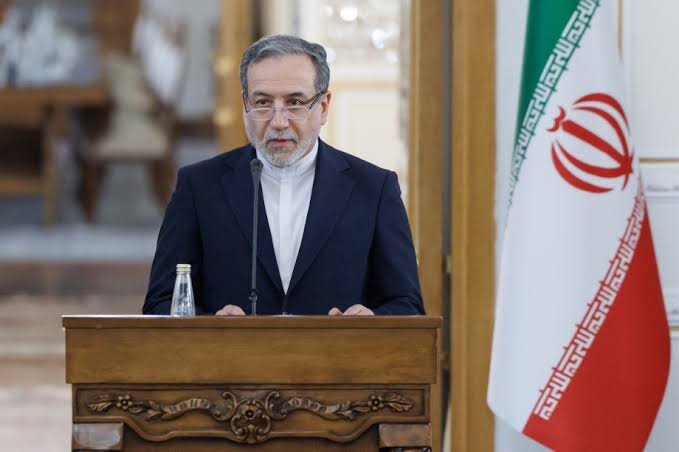
Araghchi’s sharp rebuke on Friday comes as the US president has escalated his rhetoric with direct threats against Iran’s civilian infrastructure.
In a strongly worded post on X, Araghchi declared that “seizing another nation’s assets to pay for unrelated future claims is an incendiary precedent,” cautioning that “those who celebrate or profit from such funds should remember: once governments normalize confiscation, no one’s assets are safe. Ensuing chaos will not be pretty or peaceful”.
Two weeks ago, the Islamic Republic declared the Strait of Hormuz closed “until further notice” after the terrorist US military conducted waves of deadly aerial assaults on Iran and imposed a blockade of Iranian ports.
Claiming control over the strait, the US has also been misleading vessels into passing through an unsafe route in the strategic water way causing them to suffer explosions.
The asset seizure threat is the latest in a series of provocations by President Trump, demonstrating a volatile and mercurial policy approach.
This follows his recent threat that the United States “will bomb and destroy ONE BRIDGE OR POWER PLANT” inside Iran, “including those located next to, or in, the Capital City of Tehran,” for every attack on a ship in the Strait of Hormuz.
Trump added to this by vowing to hold Iran accountable for any attacks by Yemen’s Ansarullah in the Red Sea, who have declared a naval blockade on Saudi Arabia, pledging “major military punishment”.
This is not the first time Washington has targeted Iran’s assets—a pattern Tehran decries as outright piracy. The US has a documented history of seizing Iranian oil cargoes.
In one prominent case, the US seized over 2 million barrels of Iranian crude oil from the tanker MT Achilleas and sold it for $110 million. Further incidents include the seizure of nearly 1 million barrels from the Suez Rajan in 2023, with Iran’s Foreign Ministry spokesman labeling such actions “a clear example of piracy”.
MNA