AMIR Heydari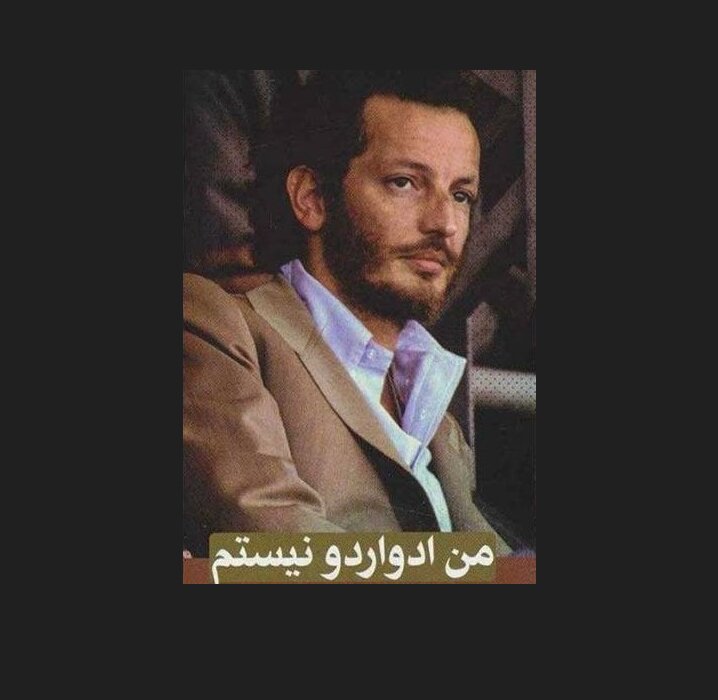
A new biography is reframing one of Europe’s most enigmatic true stories for a young adult audience.
“I Am Not Edoardo” reconstructs the life of Edoardo Agnelli, the privileged son of the Fiat dynasty, through the lens of spiritual conversion.
Presented in 72 accessible vignettes, the Persian-language book transforms the heir’s journey—from Ivy League universities to embracing Islam and his subsequent mysterious death—into a parable of faith over fortune.
Moving beyond Western media narratives, it explicitly portrays Agnelli as a deliberate martyr, offering teenage readers a provocative perspective on sacrifice, identity, and the clash between immense material power and religious conviction.
The book presents 72 brief narratives chronicling the journey of Mahdi (Edoardo) Agnelli, whom it describes as “the wealthiest Shia martyr.” The central thesis of the work is that it tells the story of “a man who did not sell his religion and faith for the world and its manifestations.”
Edoardo Agnelli, born in New York in 1954, was the son of Gianni Agnelli, the charismatic patriarch of the Agnelli family, which controlled a vast portfolio including Fiat, Ferrari, Juventus Football Club, and major newspapers.
As detailed in the book’s summary, he was raised in immense privilege—his father a Catholic, his mother a Jewish princess—and educated at elite institutions like the Atlantic College in England and Princeton University, where he earned a doctorate in Eastern religions and philosophy.

The book’s narrative focuses on Agnelli’s spiritual divergence from his family’s legacy. It portrays him from a young age as a truth-seeker, restless and courageous.
The pivotal moment came during his university years in New York. A poignant excerpt describes his discovery of an English translation of the Quran in a dusty library shelf.
“He read a few lines. It seemed interesting to him… He felt his lost thing had come close to him,” the text reads, depicting a conversion born of intellectual and spiritual curiosity.
His embrace of Islam and subsequent reported anti-establishment activities are presented as a direct affront to his powerful family, which the book notes had “extensive cooperation with Zionists.”
The book culminates in Agnelli’s mysterious death in 2000, which is framed not as a suicide or accident—as concluded by Italian authorities—but as a politically motivated assassination.
“Edoardo’s inclination towards Islam and his anti-tyranny activities caused him to finally be killed by unknown agents suspiciously on November 15, 2000,” the summary states, cementing his status as a martyr within the book’s framework.
Structured as 72 short “storylets,” the book appears designed to make this complex, transnational tale of wealth, faith, and conspiracy accessible and inspirational to Persian-speaking teenagers. It simplifies a decades-old mystery into a clear parable of sacrificing worldly privilege for spiritual conviction.
The real-life story of Edoardo Agnelli remains a subject of fascination and conspiracy theories in both Italy and Iran.
Ultimately, “I Am Not Edoardo” is less a conventional biography and more a moral fable for modern youth. It filters a complex, contested history through a clear ideological lens, presenting Edoardo Agnelli’s life as a definitive choice between two worlds.
Reported by Tohid Mahmoudpour