AMIR Heydari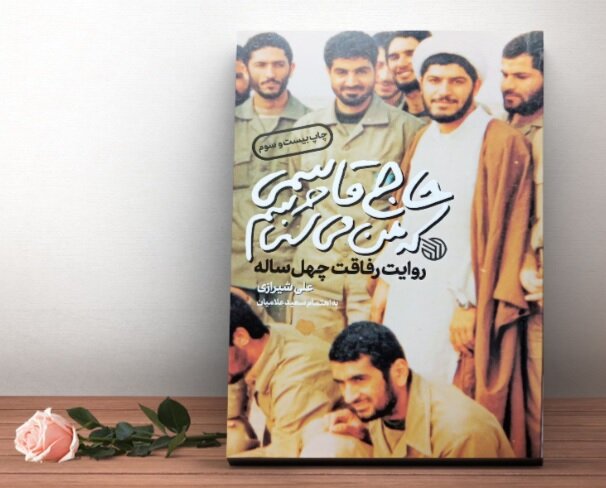
Published by Khat-e Moqaddam, the book is 168 pages long and also includes sixteen pages of related photographs.
It goes beyond the public image of the general and allows readers to meet the man: a humble friend, a dedicated soldier, and a person of profound faith and kindness.
This work, by Hojjatoleslam Ali Shirazi, chronicles a forty-year friendship with Martyr Haj Qasem Soleimani, revealing the man behind the commander.
Moving beyond official narratives and military strategies, it presents a portrait built from personal anecdotes, shared moments, and private virtues.
The book serves as an accessible gateway to understanding the personal character, deep loyalties, and human dimensions of one of Iran’s most significant contemporary personalities, as seen through the eyes of his closest companion.
“The Haj Qasem That I Knew” is a unique and personal portrait of one of Iran’s most prominent contemporary figures.
This perspective is seen through the eyes of his closest companion, the author Hojjatoleslam Ali Shirazi. The book tells the story of a forty-year friendship between the author and Martyr Haj Qasem Soleimani.
Reading it makes you realize how special this friendship was, as many important people, both inside and outside Iran, wished to have a connection with Gen. Soleimani.
The book shows that Haj Qasem truly loved the people, not just in his speeches, but through his real actions.
His deep care for the people, especially those from the Kerman region, becomes very clear as you read the author’s memories.
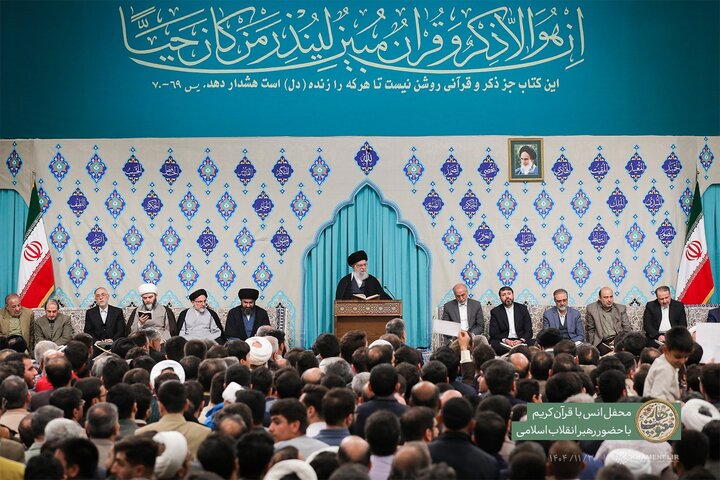
In a deeply moving meeting with the family of Martyr Soleimani, the Leader of the Islamic Revolution Ayatollah Seyyed Ali Khamenei shared a powerful story from this book.
The story showed Soleimani’s incredible kindness and sense of duty.
The Leader explained that when a friend’s grandson needed surgery, Haj Qasem went to the hospital and waited the entire time. Even after the surgery was finished, he stayed until the child woke up.
He told the boy’s mother, “Your father was martyred instead of me, so now I stand here in his place.” This memory gives readers a clear look at the true character of this beloved national hero, and it is just one of many personal stories shared in this important work.
The friendship between the two men started during the Iran-Iraq War, known in Iran as the Sacred Defense. They first met in 1982 in the city of Ahvaz.
At that time, Soleimani was a military commander giving a speech, and Shirazi was a young cleric who had just arrived at the war front.
Their relationship grew stronger over the next few years. By 1986, Soleimani asked Shirazi to lead the propaganda work for his military unit. Their partnership continued long after the war ended.
In fact, in 2011, Soleimani personally asked Shirazi to take on the important role of representing the Leader within the Quds Force. This meant the author worked directly with Haj Qasem during eight very critical years for the region.
The main part of the book is divided into twelve chapters, each focusing on a different side of Haj Qasem’s personality.
The author tells his stories in a simple and friendly way, connecting various memories to paint a complete picture of how Soleimani lived and interacted with others.
The first chapter, called “The Great Martyrdom,” covers the day Haj Qasem was martyred and how the author received the tragic news.
The second chapter, “A Good Life,” describes Soleimani’s personal and family life, including how he behaved with his wife and children.
Because the author’s family was close with Haj Qasem’s family, he shares details that are not widely known.
The third chapter is titled “The Children’s Uncle” and it focuses on the special love and attention Soleimani always showed to the children of other martyrs. The fourth chapter has the name “Devoted to the People.”
This section explores the endless love Haj Qasem had for the people of Iran and is one of the most beautiful parts of the book.
It includes a famous story about a time when many people were asking Soleimani to run for President of Iran.
When the author told him about these requests, Haj Qasem firmly refused. He stated, “Soleimani is only a soldier, nothing more!” He even added that if the Leader ordered him to run, he would go and cry in front of him until the order was taken back, showing his great humility.

The fifth chapter, “The Man of Hard Tasks,” talks about Soleimani’s strong work ethic and his efforts in military fields across Iran and the Middle East. Following that, the chapter on “Conduct and Behavior” explains his manners and how he dealt with different people and difficult situations.
Another chapter, “Lover of the Ahl al-Bayt,” is dedicated to his deep religious devotion to the family of the Prophet Muhammad (PBUH). In “An Earnest Shia,” the author writes about the high respect Haj Qasem had for Shia religious scholars.
The chapter named “The Medal of Paradise” discusses the time Soleimani received Iran’s highest military honor, the “Zolfaghar” medal, and his humble reaction to this award. The book also looks at his interests outside the military.
“Man of the Cultural Front” shares his views on culture and his strong belief in the importance of reading books. Then, “Courageous in the Political Arena” describes his brave approach to political matters.
The final chapter covers the massive and historic funeral procession for Haj Qasem, which was a huge public display of grief and respect. Overall, this book provides an essential and intimate look at a man who was much more than a commander.
Lieutenant General Qasem Soleimani, who commanded the Quds Force of the Islamic Revolution Guard Corps, was assassinated alongside Abu Mahdi al-Muhandis on the morning of Friday, January 3rd, 2020.
Reflecting on his legacy, Ayatollah Khamenei, has emphasized that “Martyr Soleimani was the lifeblood of the Resistance Front. His comprehensive support—materially, spiritually, and morally—safeguarded, strengthened, and rejuvenated this enduring and expanding movement of Resistance against the Zionist regime, American hegemony, and other arrogant powers.”
Through his leadership of Iran’s regional efforts and his extensive assistance to nations in the area, Gen. Soleimani played a pivotal role in the defeat of ISIL in Iraq and Syria and helped to curb the expansion of terrorism backed by the United States.
Reported by Tohid Mahmoudpour