AMIR Heydari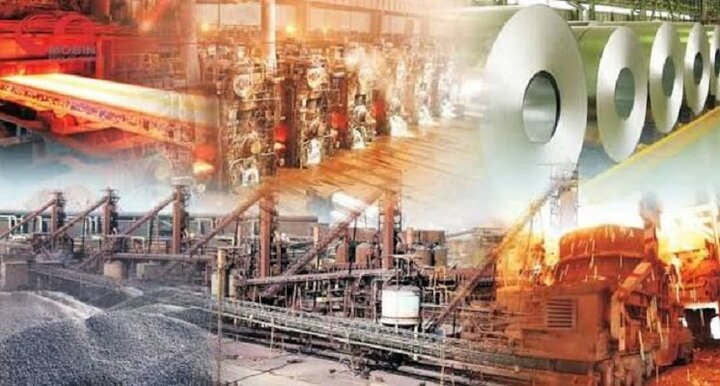
Speaking at the specialized panel on “Balancing the Flat Steel Product Chain Based on Market Demand” at the Mobarakeh Steel Group Pavilion, Majid Fakhari, Sales and Product Delivery Planning Manager of Mobarakeh Steel Group, stated, “Recognizing its pivotal role in Iran’s economic and industrial growth, Mobarakeh Steel has implemented a targeted strategy that simultaneously aims to expand exports of finished products and meet the evolving needs of domestic industries. Over the past decade, flat steel consumption has fluctuated between 8.5 and 9.5 million tons.”
Fakhari added that with the ongoing development of industries such as automotive, home appliances, fluid transmission, and construction, demand is expected to reach 14.6 million tons over the next decade. “Given the nationwide expansion of steelmaking capacities, the market will likely face a supply surplus—particularly in the hot-rolled product segment,” he noted.
Maintaining Domestic Market Share and Expanding Exports: Two Core Strategies
To ensure production stability and maximize utilization of its capacities, Mobarakeh Steel is pursuing two core strategies — maintaining its share of the domestic market and expanding exports.
“Considering the challenges of export markets and the need to penetrate new regions, a dedicated plan has been launched this year to increase the export of finished products annually in line with growing capacities,” Fakhari explained.
Strategic Focus on the Automotive and Home Appliance Sectors
He emphasized that Mobarakeh Steel places a strategic focus on meeting the needs of Iran’s automotive and home appliance industries.
“According to our ongoing projects and development roadmap, these two sectors offer the highest growth potential and value creation within the downstream steel chain. The group’s future direction is therefore aligned with supporting their advancement,” he said.
Advancing Toward Electrical Steel Production
Fakhari noted that one of Iran’s major challenges in recent years has been the imbalance in electricity supply.
“With a forward-looking strategy, Mobarakeh Steel Group has oriented its development plans toward the production of electrical steel — a product capable of transforming national energy efficiency and productivity,” he explained.
Currently, domestic consumption of electrical steel sheets stands at around 50,000 tons per year, while the potential market capacity is estimated at 200,000 tons.
He added that many transformers in Iran’s power grid are aging and require renewal, and that the adoption of high-efficiency electric motors in household appliances and industrial equipment could significantly reduce national energy consumption.
“Based on Mobarakeh Steel’s technical assessments, in the field of evaporative coolers alone, using electrical steel sheets in new motor designs could save approximately 2,000 megawatts of energy—equivalent to the capacity of a large power plant,” Fakhari said.
Further studies indicate that the widespread use of this technology across various industries could result in up to 3,000 megawatts of energy savings, translating into several billion dollars in reduced power plant construction costs.
“This achievement is not merely an industrial project but a national initiative aimed at optimizing energy consumption, improving production standards, and strengthening self-sufficiency,” he emphasized.
By developing the production of electrical steel sheets, Mobarakeh Steel is effectively reducing pressure on the national power grid and generating sustainable added value for Iran’s industry.
Pioneering a Greener, More Efficient Industrial Future
Fakhari concluded,“Through technological advancement, localization of technical knowledge, and large-scale production of this strategic product, Mobarakeh Steel is on the path to becoming the leading producer of electrical steel in the region. This direction not only drives economic growth but also lays the foundation for a greener, more efficient, and future-oriented industrial landscape in Iran.”