AMIR Heydari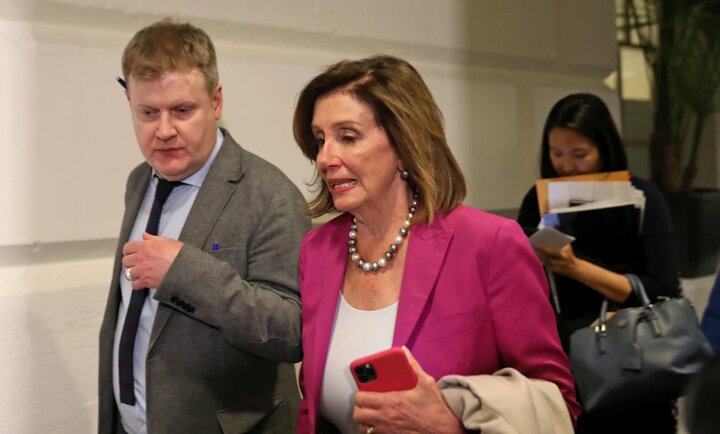
Over more than four decades, the United States’ sanctions policy against the Islamic Republic of Iran has become one of the most enduring and, at the same time, most controversial instruments of Washington’s foreign policy. From the first round of restrictions in the early years after the Revolution to the most complex financial and banking mechanisms in recent years, this strategy has been designed and implemented with the aim of changing Iran’s political behavior. However, an assessment of its practical results shows that there is a deep gap between the declared objectives and the actual consequences; a gap that has been reflected not only in Iran’s economic situation but also in the official discourse of American politicians.
In this context, recent remarks by Nancy Pelosi once again drew attention to the nature and effectiveness of the policy of economic pressure. In her statements, she emphasized that to achieve the desired objectives regarding Iran, there is no need for military action and that change can be facilitated through economic tools and by weakening the foundations of livelihoods. These remarks, beyond being an ordinary political position, carry two important messages: first, an implicit acknowledgment that previous strategies have not reached a definitive outcome; and second, the clear indication that economic pressure is not a side effect, but is itself defined as a direct lever for influencing the target society.
Sanctions have been pursued with varying degrees of intensity over the years, from oil and banking restrictions to secondary sanctions that even subject third-party companies and governments to penalties if they engage with Iran. This complex network of restrictions has effectively limited Iran’s access to the international financial system, foreign investment, foreign exchange transactions, and the free sale of oil. Nevertheless, what is increasingly being questioned is the relationship between these pressures and the realization of Washington’s declared political objectives.
If the sanctions policy had been able to lead to a fundamental change in Iran’s behavior or decision-making structure, one would expect that after all these years, there would be no need to once again raise the issue of “intensifying pressure.” The repeated emphasis on the necessity of increasing pressure is itself a sign of the relative failure of previous instruments. A strategy that is effective does not require constant redefinition and perpetual escalation; rather, it reaches a result at a certain point. The continued insistence on economic siege is, in fact, an implicit admission that maximalist objectives have not been achieved.
On the other hand, the lived experience of Iranian society shows that sanctions, more than transforming political structures, have affected the daily lives of citizens. The modern economy has a networked structure; its various sectors are interconnected like links in a chain. When oil exports are restricted, foreign currency revenues decline; the decline in foreign currency revenues affects the value of the national currency; the depreciation of the national currency leads to inflation; and inflation ultimately reduces household purchasing power. This chain operates in such a way that the main burden falls on lower-income deciles and vulnerable groups.
In recent years, rising prices of basic goods, difficulties in procuring medicines and medical equipment, increased housing and service costs, and reduced investment capacity of domestic producers have been among the tangible consequences of these pressures. Even if sanctions are officially described as “targeted” or “smart,” economic reality shows that one cannot isolate part of an economy and expect the rest to remain unharmed. Banking blockades or insurance restrictions in the shipping sector ultimately affect the price of goods in local stores as well.
It is within this framework that some analysts use the concept of “economic war” to describe this situation. In this approach, the economy becomes the main arena of confrontation, and financial tools replace military instruments. The apparent difference in the type of tools does not diminish the intensity of their impact on people’s lives. If in a classic war, infrastructure is targeted, in economic war, financial and commercial networks are disrupted; in both cases, the result is a reduction in public welfare and an increase in social uncertainty.
Another important point is the convergence of the two main American parties regarding this policy. Although in the domestic arena, competition between Democrats and Republicans sometimes reaches the peak of tension, on the issue of Iran, a kind of strategic consensus is observable. Differences are mainly manifested in tone, prioritization, and the degree of pressure applied, not in the principle of using sanctions as the primary instrument. Whether during periods when the slogan of “maximum pressure” was highlighted or at times when “diplomacy accompanied by pressure” was emphasized, the core structure of sanctions has been preserved or even strengthened.
This continuity shows that for American policymakers, sanctions are not a temporary tool but part of the long-term framework for managing relations with Iran. However, their human consequences raise serious ethical and legal questions. How can one speak of supporting people’s rights on the one hand, while on the other pursuing a policy that directly affects those same people’s livelihoods? Can widespread economic pressure on a society be justified with the language of human rights?
Some advocates of sanctions argue that this instrument is less costly and less risky than the military option. But this comparison only makes sense if the human costs of sanctions are ignored. Reduced access to medicine, rising unemployment, growing inflation, and expanding economic uncertainty are consequences that directly affect the lives of millions. These pressures may not lead to political change, but they undoubtedly affect people’s quality of life.
From the perspective of effectiveness as well, the experience of the past four decades shows that despite creating serious limitations, sanctions have not led to economic collapse or a fundamental change in the structure of power. Despite reduced growth, severe currency fluctuations, and widespread difficulties, Iran’s economy has continued to function and has created numerous mechanisms of adaptation, from expanding trade with non-Western partners to developing certain domestic capacities. This relative resilience itself indicates the limitations of sanctions as a tool for achieving maximalist objectives.
Moreover, long-term sanctions can also produce unintended consequences. Reduced dependence on the Western financial system, strengthened economic ties with Asian powers, and the formation of alternative financial mechanisms are among the trends that have emerged in response to pressure. In other words, a tool designed with the aim of increasing isolation has, in some cases, led to a reconfiguration of interaction pathways.
At the social level as well, external pressure has at times led to the strengthening of national solidarity or increased skepticism toward the intentions of the opposing side. When people directly experience the effects of sanctions in their daily lives, they may seek the source of this pressure not solely in domestic policies, but also in external decisions. This can confront the initial calculations of the designers of sanctions with unforeseen complexities.
Ultimately, the main issue returns to a fundamental question: can widespread economic pressure be regarded as a legitimate instrument for advancing political objectives? If the goal of foreign policy is to create international stability and security, it must be assessed whether comprehensive sanctions help reduce tension or, on the contrary, increase mistrust. The experience of recent years shows that although the economy is an important arena for competition among powers, turning it into a tool of direct pressure on people’s livelihoods has consequences that go beyond short-term political calculations.
Recent statements by American officials, including the remarks of Nancy Pelosi, more than indicating a new strategy, are a reminder of the continuation of the same previous logic: the use of the economy as a lever of pressure. However, the repeated emphasis on the necessity of intensifying pressure itself indicates that this instrument has not achieved its ultimate objectives. Under such circumstances, reconsidering the effectiveness and human consequences of this policy appears to be an undeniable necessity not only for Iranian society but also for the international system.
DID