AMIR Heydari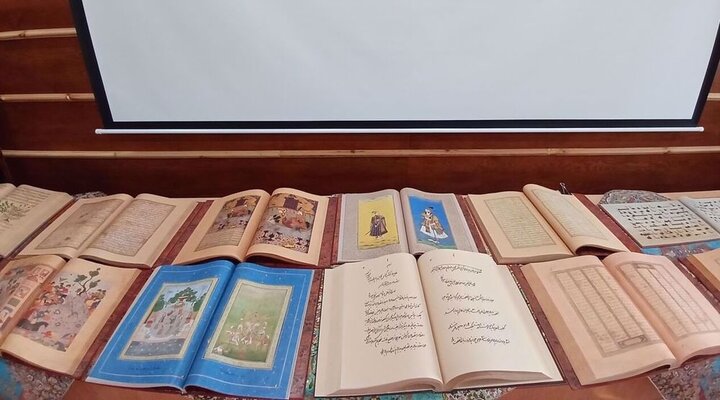
At the unveiling ceremony on Sunday, Mohammad Mehdi Alavianmehr, head of ISC, emphasized the value of such collections, saying, “Manuscripts collected from Iran and other countries are among the sources that strengthen ISC databases.”
He highlighted the historical ties between Iran and India, stating, “Iranians have ruled or carried out cultural activities in India for about 800 years. During this period, Persian served as the reference and scientific language of India, and many valuable documents have been preserved from that era.”
He noted that the significance of the manuscripts collected by Mehdi Khajehpiri, Founder of Noor International Microfilm Center, is now consolidated at ISC for researchers across Iran and the Islamic world, according to Press TV.
“These documents, both digitally and physically preserved on microfiches, will be indexed and coded to make them fully accessible to scholars,” he said.
Describing the manuscripts as a vital part of Iran’s cultural identity, Alavianmehr added, “What the Noor Microfilm Center has done to revive Iran’s heritage aligns with the mission of ISC, and we hope this action will mark the beginning of a great path in the country.”
He stated that ISC has assumed a central role in digital humanities and expressed hope that the country’s major universities join the center in these efforts.
Speaking at the ceremony, Khajehpiri underscored the urgency of preserving manuscripts, noting, “If we cannot protect existing manuscripts today, future generations will judge us poorly tomorrow.”
Recounting more than four decades of efforts in India, he explained that millions of Persian documents in Telangana archives had been exposed to damage from insects and vermin for over 700 years.
“Today, we have collected and digitized over 10 million Persian manuscripts from India, including 100,000 that no longer exist physically,” he said.
Khajehpiri underlined the challenges of access, citing an example of a monastery library in India where 7,000 manuscripts were initially off-limits; persistence allowed them to be digitized.
He added that the Noor Microfilm Center’s manuscript restoration capabilities are unmatched globally, having successfully restored 80,000 manuscripts at Astan Quds Razavi under the guidance of the Leader of the Islamic Revolution, Ayatollah Seyyed Ali Khamenei.
“These documents will now be integrated into the ISC, making them available to all scholars,” Khajehpiri said, emphasizing that many sources are unique and capable of filling historical gaps.
DID