AMIR Heydari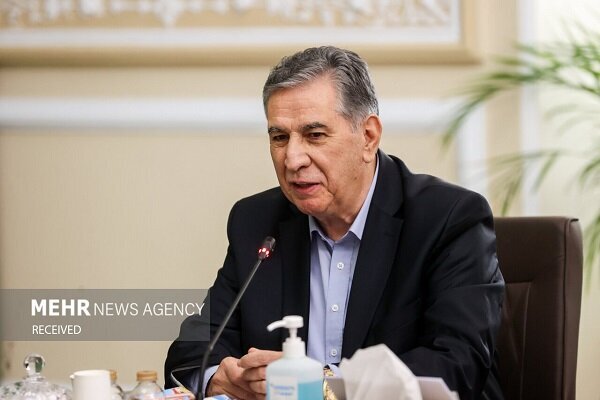
Speaking at a seminar on Iran–Kazakhstan Trade Cooperation on Wednesday, Samad Hassanzadeh proposed the launching of Green Transit Corridor between the two countries with special customs discounts and rapid transportation.
With a gross domestic product (GDP) of more than $288 billion, the Republic of Kazakhstan holds an important position in the Eurasian economy and is one of Iran’s key partners in the Central Asia, he underlined.
Hassanzadeh put the bilateral trade exchanged between the two countries over the past 10 months at about $360 million, $243 million and $115 million of which is related to Iran’s exports of products to Kazakhstan and import of products from this country.
The chairman pointed out that Iran and Kazakhstan have high potentials to increase their trade more than this level, adding, “Once trade barriers between the two countries are removed, the bilateral trade between Iran and Kazakhstan will reach $3 billion.”
Elsewhere in his remarks, Hassanzadeh highlighted the need for joint investment rather than simple commodity trade.
He identified three potential projects: a joint logistics terminal in southern Iranian ports; shared facilities for processing grain, meat and vegetable oil; and a joint industrial zone in Iran’s free trade areas to serve Eurasian markets.
Turning to the existing challenges in the development of relations between the two countries, Hassanzadeh pointed out that sanctions, banking restrictions, risk of unreliable companies and severe regional competition are of the most important challenges facing the two countries, he emphasized.
He described Kazakhstan, with a gross domestic product of more than $288 billion, as a key Eurasian economy and one of Iran’s principal partners in Central Asia.
The official said bilateral trade over the past ten months reached about $360 million, including $243 million in Iranian exports and $115 million in imports from Kazakhstan, adding that while the trade balance is positive for Tehran, the current level of cooperation remains far below the two sides’ potential.
Noting Kazakhstan’s position as a major supplier of oil, iron concentrate and base metals, and Iran’s strengths in downstream petrochemicals, machinery and technical expertise, he proposed a joint consortium for processing Kazakh minerals in Iran for re-export at higher value.
He described Kazakhstan, with a gross domestic product of more than $288 billion, as a key Eurasian economy and one of Iran’s principal partners in Central Asia.
The chairman of ICCIMA also cited challenges facing the relationship, including sanctions, banking restrictions, unreliable companies and strong regional competition. But he said practical solutions exist, including formal and systematic barter, a shared financial platform in a free trade zone, a company credit-rating system and Iran’s participation in long-term Kazakh infrastructure projects.
MA/6684746