AMIR Heydari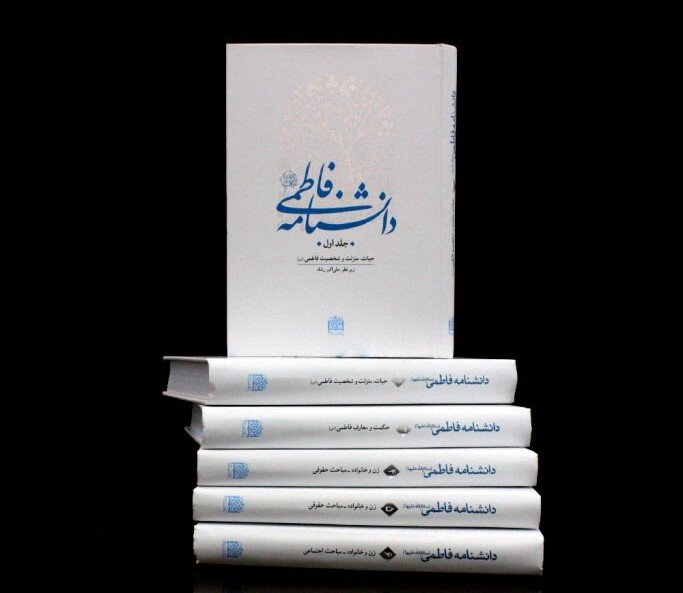
In a significant scholarly achievement, the Islamic Research Institute for Culture and Thought has completed a major publication project. This project is a six-volume thematic encyclopedia dedicated to Lady Fatimah al-Zahra (SA), the daughter of the Prophet Muhammad (PBUH).
Titled “The Fatemi Encyclopedia,” this comprehensive collection serves as a definitive reference. It aims to provide a detailed and scholarly account of her life, spiritual status, and teachings.
The project addresses a critical need in today’s intellectual and cultural landscape, offering an authoritative resource for understanding one of the most pivotal figures in Islam.
The encyclopedia was conceived with several key objectives in mind. A primary goal was to present a clear and authentic model for Muslim women.
In an era marked by global cultural crises, particularly regarding studies on women, the encyclopedia offers a powerful Islamic perspective.
The work clarifies the foundations of women’s rights and dignity in Islam by presenting the life of Lady Fatimah (SA) as a tangible and inspiring example.
Additionally, it addresses historical and theological ambiguities, tackling complex questions and misconceptions that have arisen over the centuries. The analysis is rigorous and scholarly, avoiding emotional or exaggerated language.
The encyclopedia also aims to correct historical distortions and deviations, providing a clear narrative based on reliable sources.
Published in Persian in 2014, the Fatemi Encyclopedia is the result of extensive research.
The collection features 117 individual articles organized across six volumes into three main thematic areas.
The first area of focus covers the life, status, and character of Lady Fatimah (SA) and spans the first two volumes. It details her birth, her life as the daughter of the Prophet, her marriage to Imam Ali (AS), and her role as a mother.
The second area, addressed in the third volume, delves into “Fatemi Wisdom and Teachings.” This section explores the philosophical and spiritual knowledge she imparted and presents a coherent intellectual framework centered on the relationship between the perfect human and the Creator.
The third and final area focuses on “Woman and Family” and is spread across volumes four, five, and six. It contains 49 articles that discuss the legal and social status of women and the family unit in Islam.
These discussions are deeply rooted in the principles demonstrated in Lady Fatimah’s (SA) life.
The encyclopedia is designed with several distinctive features to ensure its value and accessibility.
One key feature is its “Scientific Authority.” The contributors aimed to create a work that, while acknowledging the unique stature of its subject, provides essential and analytical information.
It is intended to serve as a primary reference for both researchers and general readers, minimizing the need to consult numerous other sources for foundational knowledge.
A second crucial feature is the “Presentation of a Role Model.” The central mission of the encyclopedia is to present Lady Fatimah (SA) as an accessible and practical example for people today.
Beyond providing historical facts, it independently analyzes her conduct across various aspects of life.
This includes her ethical behavior, devotional practices, spiritual journey, role as a wife, household management, child-rearing methods, and participation in socio-political affairs.
The articles take a descriptive and analytical approach to make her personality relatable and her example easy to follow.
Additionally, the work is dedicated to a “Scholarly and Explicit Defense of Historical Truth.” The encyclopedia employs a scientific method and precise language, relying on citations from trusted sources from both Shia and Sunni schools of Islamic thought.
It defends historical facts as they were, steering clear of unsubstantiated opinions and emotional influences.
Finally, it aims to “Provide a Basis for Scientific Assessment.” The articles are written in a way that allows readers to critically evaluate historical events and narratives themselves.
It helps facilitate an understanding of how events unfolded and enables comparisons between different historical accounts, empowering the reader to form a well-informed judgment.
The significance of the Fatemi Encyclopedia has already been recognized within scholarly circles.
In 2015, it was awarded as the outstanding work at the 17th Annual Book Award Ceremony of the Islamic Seminary. This prestigious recognition underscores its contribution to Islamic scholarship.
This work represents a monumental effort to systematize knowledge about a figure central to the Islamic faith, particularly for Shia Muslims.
For a global audience with limited prior knowledge of Islam, understanding Lady Fatimah’s (SA) significance is crucial.
In Islam, the Prophet Muhammad (PBUH) is considered the final messenger of God, and his household, known as the Ahl al-Bayt, is revered for their piety, knowledge, and leadership.
Shia Muslims hold that the rightful leadership of the Muslim community after the Prophet belongs to his cousin and son-in-law, Imam Ali (AS), and then to his designated descendants.
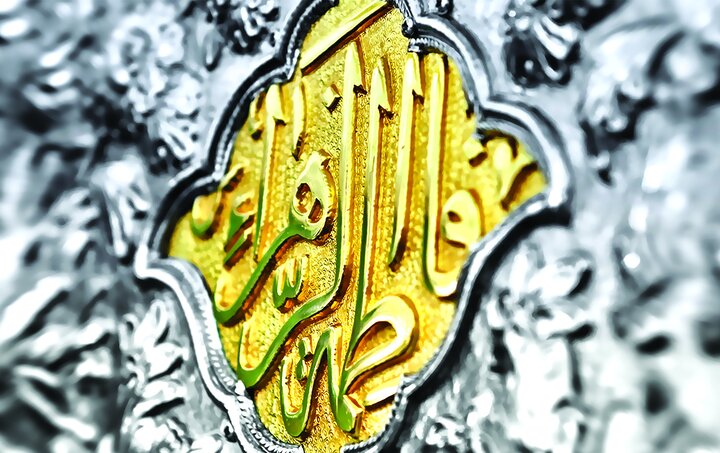
Lady Fatimah (SA) is a vital link in this lineage. She is the beloved daughter of the Prophet, the wife of Imam Ali (AS), and the mother of Imam Hasan (AS) and Imam Hussain (AS).
For Shia Muslims, she embodies purity, devotion, and resistance against oppression. Her sermons and actions following her father’s passing are foundational to Shia history and theology.
The “Fatemi Encyclopedia” thus serves a dual purpose. It is both an academic resource of the highest order and a spiritual and intellectual guide.
It provides insight into the essence of Islam through the life of one of its most revered figures.
Additionally, it offers a robust framework for understanding Islamic concepts of gender, family, and spirituality.
The publication of this work marks a significant milestone in contemporary Islamic studies and serves as a reliable guide for anyone navigating the complex questions of faith, identity, and modernity.
Reported by Tohid Mahmoudpour