AMIR Heydari
As Iran marks the 8th of Dey, the National Day of the Petrochemical Industry, the sector stands as a towering testament to the nation’s industrial ambition and a cornerstone of its non-oil economic strategy.
From humble beginnings in the mid-20th century to its current status as a global player, Iran’s petrochemical journey is a narrative of strategic focus, technological adoption, and pivotal contribution to national sovereignty.
The genesis of Iran’s petrochemical industry dates back to the 1950s. This entity embarked on a landmark project in 1958: the construction of the Marvdasht Chemical Fertilizer Plant in Fars province.
This initial step soon revealed the necessity for a specialized, integrated body to harmonize development with the vast oil and gas sector.
Consequently, in 1963 (1342 Persian calendar), the National Petrochemical Company (NPC) was founded. Established with full government ownership under the umbrella of the National Iranian Oil Company (NIOC), the NPC centralized all activities related to the creation and expansion of petrochemical industries, providing the coordinated thrust needed for large-scale development.
The petrochemical industry, a crucial subset of the chemical sector, transforms raw materials derived from crude oil and natural gas into a vast array of chemical products.
Since the early 20th century, hydrocarbons have gained vital importance as feedstocks for countless compounds essential to modern life.
For Iran, a nation ranking fourth in global oil production and holding the world’s second-largest natural gas reserves, this industry represents far more than a revenue stream—it is the primary engine for moving up the value chain.
As a strategic industry, petrochemicals play a fundamental role in generating high-value-added products, systematically reducing the economy’s historical dependence on the sale of unprocessed crude oil and gas.
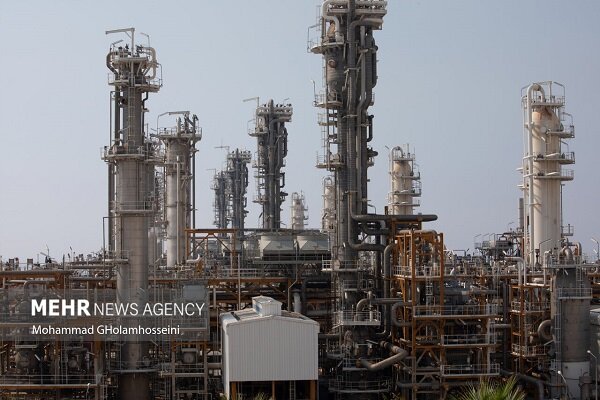
It converts basic hydrocarbon feedstocks into a diverse portfolio, including various polymers, chemical fertilizers, and intermediate chemicals.
These outputs are indispensable inputs for downstream industries such as textiles, medicine, automotive manufacturing, electronics, appliances, and agriculture.
Today, Iran’s petrochemical industry is a central pillar of the national oil industry’s value chain and a powerful driver of economic, political, and social development.
It significantly contributes to the Gross Domestic Product (GDP) and exemplifies the practical realization of a resilient economy and sustainable development.
The wave of transformation within this sector has not only curbed raw material sales but has also led to multiplied economic value addition, wealth generation, and job creation.
By leveraging the country’s enormous potential in oil, gas, and petrochemical resources, the industry provides a solid platform for achieving key national objectives: employing state-of-the-art knowledge and novel technologies, enhancing productivity, and moving decisively toward manufacturing products with ever-higher value addition.
One of the most critical features underscoring this strategy is the sector’s exceptionally high value-added potential.
Through chemical and physical processes on oil and gas hydrocarbons, the value of the final product can be increased by a factor of 10 to 15 times compared to the raw feedstock. This transformative capacity is at the core of the industry’s economic rationale.
Globally, the chemical industry—with petrochemicals as its dominant force—has emerged as a key sector over recent decades, currently standing as the world’s third-largest industry after food and automotive. Iran’s focused investment and development have positioned it to compete effectively in this significant market.
As Iran commemorates Petrochemical Industry Day, the sector’s role is more crucial than ever. It embodies the nation’s shift from a resource-based economy to one increasingly powered by knowledge, technology, and industrial diversification.
Facing external economic pressures, the continued expansion, modernization, and integration of the petrochemical complex are not merely industrial goals but imperatives for national economic resilience, ensuring that Iran’s vast hydrocarbon endowments translate into lasting prosperity, advanced employment, and fortified economic independence.
The 8th of Dey, therefore, is not just a retrospective celebration but a forward-looking commitment to empowering this strategic industry as the definitive driver of Iran’s industrial and economic future.
Furthermore, the strategic diversification and export capacity of the industry stand as major post-Islamic Revolution achievements.
It is estimated that approximately 70% of Iran’s petrochemical products are available for export to various global markets.
This robust export potential, encompassing a wide range of goods from polymers to fertilizers, not only generates vital foreign currency revenue but also solidifies Iran’s position as a key supplier in the international petrochemical supply chain, enhancing its economic diplomacy and global trade linkages.
Reported by Tohid Mahmoudpour