AMIR Heydari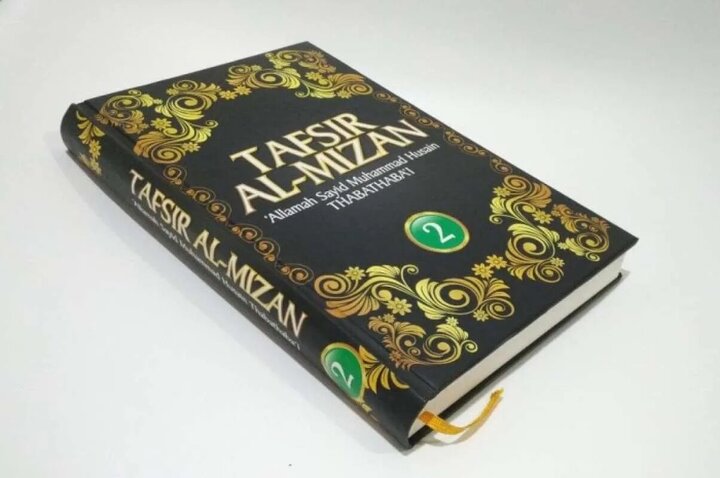
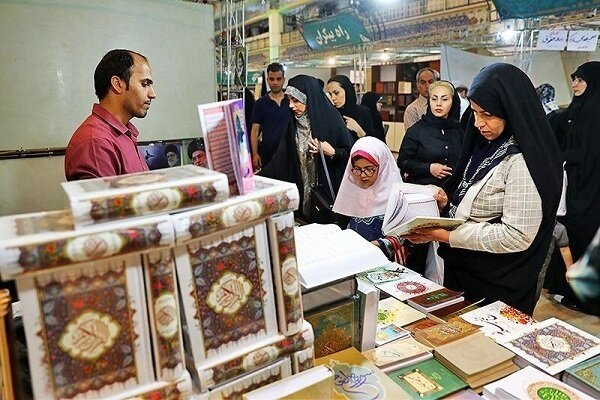
For English-speaking audiences who may be unfamiliar with Islam and its scripture, the Quran holds a central position in the faith and lives of over a billion Muslims worldwide.
As the verbatim word of God revealed to the Prophet Muhammad, peace be upon him, understanding this sacred text has always required deep and insightful exegesis, known in Arabic as “Tafsir.”
Among the most revered of these interpretive works is “Tafsir al-Mizan,” a monumental 20-volume commentary widely regarded as one of the most comprehensive and influential in the Islamic world.
This masterpiece was written by Allamah Sayyid Muhammad Husayn Tabataba’i (1903-1981), a leading 20th-century Iranian Shi’a philosopher, theologian, and mystic.
Allamah Tabataba’i authored numerous books and articles, yet Tafsir al-Mizan stands out as his greatest achievement and most enduring legacy.
Unique methodology: The Quran explaining the Quran
The defining feature of Tafsir al-Mizan is its rigorous methodology. Allamah Tabataba’i primarily employed “tafsir al-Qur’an bil-Qur’an,” or “interpreting the Quran with the Quran.” This means that to clarify the meaning of a specific verse, he cross-referenced it with other verses throughout the scripture, allowing the Quran to interpret itself.
He believed that since the Quran describes itself as a clear and clarifying book, it should be the main source for its own exegesis—an approach he said was also used by the Ahl al-Bayt (the Household of the Prophet).
This self-referential method has earned Tafsir al-Mizan great respect for its intellectual depth, coherence, and fairness, making it a highly authoritative source among Sunni and Shi’a scholars alike.
Prominent modern thinkers have praised it as one of the greatest Quranic commentaries ever written.

Tafsir al-Mizan is a “sequential” commentary, meaning it examines the verses of the Quran in the order they appear in the standard Muslim text.
Originally written in Arabic, its 20 volumes have been translated into several languages, including English, Persian, Urdu, and Spanish, making its profound insights accessible worldwide.
The content of Al-Mizan is encyclopedic. It goes beyond simple word-by-word explanations to explore the Quran’s deep philosophical, theological, ethical, and social teachings.
For each section of verses, the author usually includes a part dedicated to examining and critically analyzing related narrations (Hadith) from the Prophet and Imams. Additionally, Allamah Tabataba’i emphasized the thematic unity of each chapter (Surah), arguing that its verses are cohesively structured around a central purpose.
More than just a commentary, Tafsir al-Mizan is a vast Quranic encyclopedia.
It is known for filling in gaps left by earlier classical works while establishing a solid foundation for future research. Its balance, precision, and depth have made it an essential resource and a treasure trove of Islamic thought.
For any sincere student of the Quran—whether a Muslim seeking a deeper understanding or a non-Muslim researcher—Tafsir al-Mizan provides an unmatched guide to understanding the divine text in a coherent, logical, and self-referential way.
It continues to be a timeless contribution to Islamic scholarship and a guiding light for those exploring the depths of the Quran’s message.
Reported by Tohid Mahmoudpour