AMIR Heydari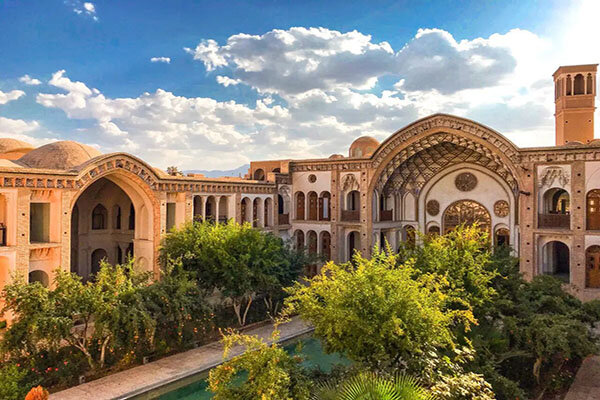
In an important acknowledgment of Iran’s deep cultural history, the historic city of Kashan has been accepted into the UNESCO Creative Cities Network (UCCN).
It has been named a creative city in the area of architecture. This honor, announced at the same time as World Cities Day, puts Kashan on the international stage next to famous cities like Rome, Paris, and Barcelona.
It confirms the city’s status as a leading example of sustainable architecture and a real part of our shared global heritage.
The official decision was delivered by Hossein Fartousi, Secretary-General of Iran’s National Commission for UNESCO, during the 43rd session of the UNESCO General Conference in Samarkand on October 31, 2025.
The event, which also included Science Minister Hossein Simaei-Sarraf, has been described as a “major step forward for the sustainable development of Iranian-Islamic culture and architecture.”
This significant achievement provides a perfect opportunity to explore both the unique architectural marvels of Kashan and the deeper ideas behind Iranian-Islamic architecture that the city represents so well.
Kashan: A desert city of smart design and natural beauty

Located in central Iran, Kashan is much more than just a place with old buildings. It is a living example of traditional architecture, a beautiful combination of science, art, and the desert environment.
The city’s entry into the UCCN—a group of over 300 cities worldwide that promotes creativity for sustainable urban growth—brings international attention to a treasure of knowledge developed over centuries.
Kashan’s city design is a brilliant lesson in how to live in balance with a difficult natural environment. The city’s traditional buildings are not just about looks; they are about practical function, sustainability, and the spiritual connection between people and nature. This can be clearly seen in its famous old houses.
The stunning Abbasi House, with its detailed plasterwork and layered courtyards, and the Boroujerdi-ha House, famous for its tall wind-catcher, are perfect examples.
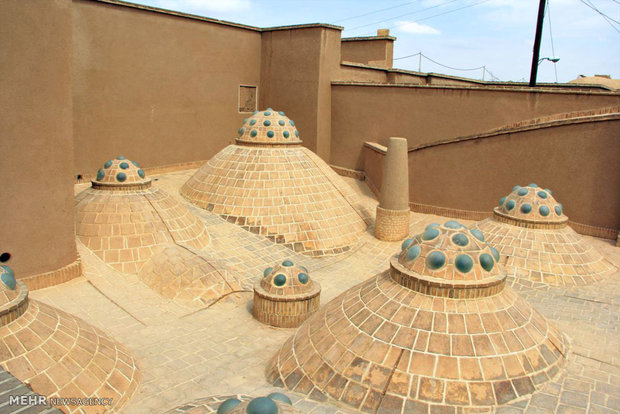
These homes were built with careful planning and a natural understanding of how to control the climate.
They used underground water channels, central courtyards with pools, and smartly placed windows to create natural air conditioning long before it was invented in modern times.
Moreover, the Fin Garden, which is already on the UNESCO World Heritage List, is the ultimate example of the Persian “Paradise Garden.”
This beautiful site, with its symmetrical layout, flowing streams, and tall cypress trees, is like a small model of a perfect world.
It represents the constant balance between the desert and the water that gives life. It is a physical expression of the search for a paradise on earth, a central idea in Iranian culture.
The lasting principles of Iranian-Islamic architecture
Kashan’s new status helps us understand the bigger picture of Iranian-Islamic architecture, which is a very important part of world architectural history.
Experts see it as the first art form that truly matched Islamic ideas and was widely accepted by Muslims. Its true nature goes much deeper than simple decoration, touching the very core of spiritual and everyday life.
Fundamentally, Iranian-Islamic architecture is guided by the principle of “God-centricity.” This concept means that every part of a building is designed to remind people of the central Islamic belief in one God.
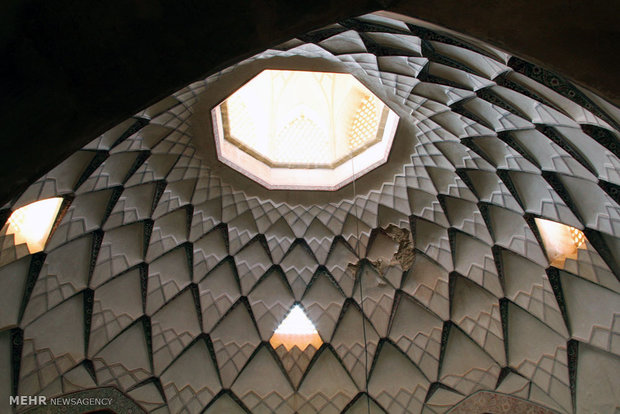
This is often accomplished through a unified, central design, where both the outside and inside spaces, frequently decorated with beautiful writing of Quranic verses, direct a person’s attention toward a single, divine focus.
The practical intelligence of this architecture is most visible in its religious buildings. Mosques, shrines, and religious schools are considered its best examples.
They are designed to create a perfect relationship between the act of prayer and a space that is right for it. Features like high, vaulted halls, tall columns, exact geometric patterns, and stunning decorations are not random; they are purposeful tools to create a feeling of wonder and deep thought.
As explained by the well-known Iranian philosopher Seyyed Hossein Nasr, the central role of the mosque in Islamic architecture shows its sacred character.
He suggests that the “mosque-like” feeling of other Islamic buildings comes from the skill of architects who wanted to include the memory of God in normal daily life.
This architectural style appears in many different types of buildings. Researchers group them into religious structures—like mosques and husseiniyas—and non-religious ones, such as houses, markets, roadside inns, and bridges.
Some Western scholars believe Islamic architecture started with the Ka’aba, while others point to the two main models of the mosque and the palace.
One last, fascinating aspect is the meaningful use of color. The colors most common in Islamic architectural art—turquoise, blue, green, yellow, white, and black—are never chosen by chance.
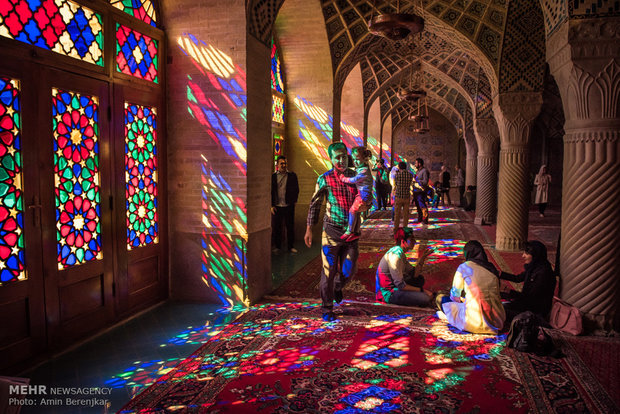
For these reasons, Kashan’s inclusion in the UNESCO Creative Cities Network is more than just a city planning award.
It is a worldwide approval of a timeless architectural philosophy—one that Kashan has kept alive and perfected.
It celebrates a heritage where beauty is intelligent, sustainability is natural, and every arch, tile, and garden path tells a story of a culture that successfully looked for harmony between the spiritual and the everyday world.
Reported by Tohid Mahmoudpour