AMIR Heydari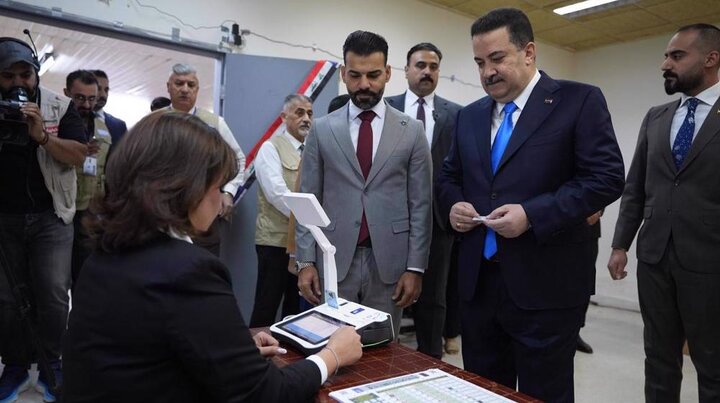
In a statement, the Independent High Election Commission said a total of 12,009,453 citizens cast ballots to elect members of the 329-seat parliament.
It explained that 10,904,637 Iraqis voted on Tuesday, with a 54.35% voter turnout, while 1,084,289 military and security personnel and 20,527 displaced persons cast ballots during Sunday’s special voting, with 82.52% and 77.35% turnout, respectively.
A total of 7,743 candidates contested the elections, including 2,247 women.
The current parliamentary term began on January 9, 2022, and lasts four years. Under Iraqi law, parliamentary elections must be held at least 45 days before the end of the current legislative term.
According to Reuters, a coalition led by Iraqi Prime Minister Mohammed Shia al-Sudani came first in the elections, preliminary vote count says, according to two electoral commission officials with knowledge of the results.Sudani was seeking a second term in Tuesday’s election but many disillusioned young voters saw the vote simply as a vehicle for established parties to divide up Iraq’s oil wealth.
However Sudani tried to cast himself as the leader who could finally make Iraq a success after years of instability, arguing he had moved against established parties that brought him to power.
No party is able to form a government on its own in Iraq’s 329-member legislature, and so parties have to build alliances with other groups to become an administration, a fraught process that often takes many months.
The Kurdish parties in the Kurdistan region, the PDK and PUK, headed the votes by 29 seats and 18 seats, respectively.
DID