AMIR Heydari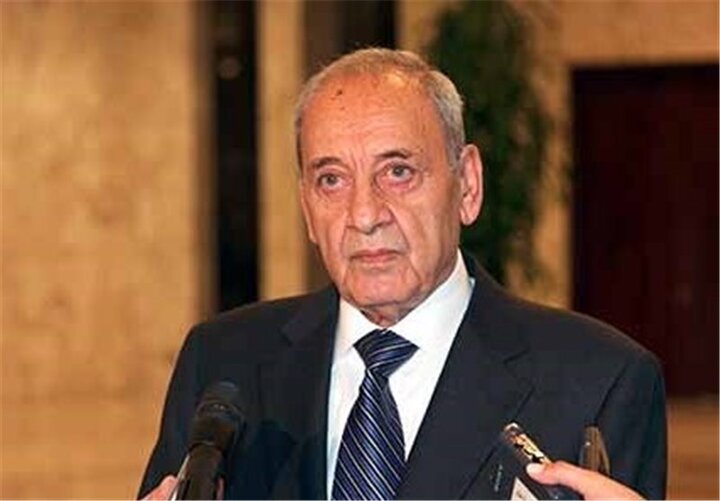
In remarks to Elnashra on Tuesday, Berri said he plans to unite opponents of the proposed agreement into a broad national bloc capable of preventing its approval by lawmakers.
“Those who drafted this document will have to deal with me and a very large number of lawmakers,” he warned, according to Press TV.
Berri said he is working to prevent political tensions from escalating into wider unrest.
The parliament speaker said he remains committed to keeping the political dispute within constitutional channels and preventing street protests calling for the overthrow of the Lebanese government.
“I am trying to prevent an escalation of discontent that could turn into an internal conflict threatening civil peace,” he said.
Berri, who also heads the Amal Movement, recalled that Lebanon’s parliament rejected the May 17, 1983 agreement with Israel in 1984, describing it as an “oppressive treaty.”
He stated that the current proposal is “ten times worse,” saying its purpose is “to provoke internal strife.”
Berri urged Prime Minister Nawaf Salam to withdraw the proposed controversial agreement after Salam called to thank him for helping prevent unrest in Beirut on June 26 involving supporters of the Hezbollah resistance movement.
Berri had earlier said the deal “is an imposition, not an agreement that preserves Lebanon’s rights,” warning that its consequences would be severe.
Berri’s Amal Movement has also rejected the controversial agreement, saying most of its provisions are detrimental to Lebanon’s national interests and serve the interests of the Israeli regime.
Senior Hezbollah lawmaker Hassan Fadlallah has also denounced the US-mediated framework agreement, describing it as a “humiliation,” a “disgrace,” and a virtual surrender of Lebanese sovereignty.
The lawmaker said the Lebanese government has “no fear about selling out southern Lebanon and its residents and exonerating the occupiers from past, present, and future crimes.”
“Had Netanyahu himself drafted this agreement, he could not have produced a better outcome than the one the Lebanese government—in coordination with the American side—has secured for him,” Fadlallah said on Sunday.
The developments come as Israeli prime minister Benjamin Netanyahu visited troops in southern Lebanon on Tuesday, saying that the occupying forces would stay in the area.
Israeli troops continue to occupy a self-declared so-called “security zone” extending about 10 kilometers into Lebanese territory.
Despite the ceasefire, the Israeli regime has continued to bombard residential areas and civilian infrastructure across southern Lebanon.
Since March 2, Israel has conducted an expanded offensive in Lebanon, killing more than 4,247 people, injuring over 12,190, and displacing more than 1.6 million individuals.
DID