AMIR Heydari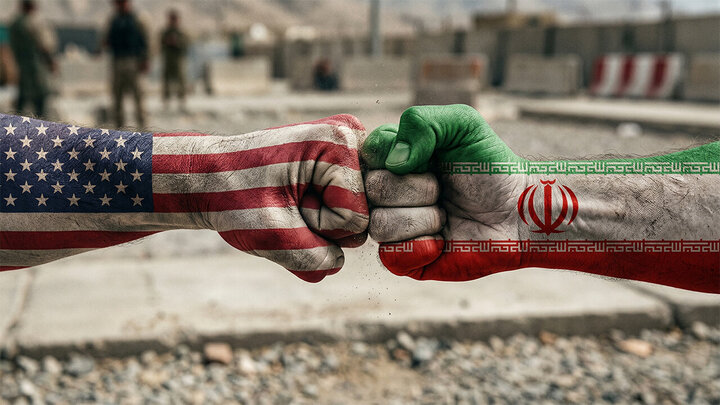
With the recent Iran–US Memorandum of Understanding explicitly stipulating in its very first clause a cessation of all hostilities on every front, including Lebanon, the continued Israeli military operations in southern Lebanon have not only challenged the spirit of the agreement but its literal text.
This glaring contradiction between Washington’s promises and the reality on the ground raises an urgent question: what enforcement power does the MoU actually carry, and how should the Islamic Republic of Iran respond to its systematic violation by Tel Aviv? To examine these dimensions, Mehr News Agency conducted an interview with regional affairs expert Javed Rana. The full interview follows.
With the signing of the recent Iran–US memorandum of understanding, explicitly stipulating the cessation of all hostilities on every front, including Lebanon, how do you assess Israel’s continued military actions in southern Lebanon? Doesn’t this directly violate the spirit and text of the very first clause that Washington committed to?
I think Israel has been, in a very systematic manner, trying to derail the peace process, which is at its very initial stage. We have seen repeatedly that whenever there was progress in the talks, Israel attempted and carried out an attack in Beirut, and at the end of the day it forced Iran to, for the first time, carry out an attack in the northern part of apartheid Israel. That was in reaction to protect Hezbollah in Lebanon, and that actually set a new paradigm shift where Iran established its strategic edge, warning Israel that the days when it would stay silent while its allied Axis of Resistance were attacked and not reinforce them with a full-scale attack on its territory in apartheid Israel are over. So with that context, Iran has now managed to create an equation.
Israel knows that if this deal is finalized, completed, and implemented, Iran would be not only a military might but also an economic giant in the Middle East. That is going to prevent Israel from further pursuing its expansionist agenda. Keep in mind that this is the first time since Israel was created in the Middle East that there is a country, which is Iran, that has managed to at least put some kind of a comma or full stop to the expansionist design of Israel. Israel has a clear agenda to go up to Saudi Arabia and take over much of the Middle East.
Israel continues to violate the ceasefire agreement which happened first between the US and Iran, then between Lebanon’s government and Israel, and lately between Hezbollah and Israel.
Ceasefire agreements mean nothing whenever they are inked with Israel. The only thing that can stop Israel from expanding its territory is only military might, which Iran effectively used first in the direct war and now lately in support of Hezbollah. The broader picture is that since Iran has already closed the Strait of Hormuz, that is a good step and a reminder to the Americans that they need to put their words into action and stop Israel from attacking Hezbollah and the Lebanese people. More than 1.2 million people have been displaced and more than 75,000 units have been destroyed in Lebanon. Most of the farmers have lost their agricultural land because it is not accessible or has been destroyed and disrupted by the brutal Israeli forces. So, by once again closing the Strait of Hormuz, that is a message to the Americans that they need to stop Israel. If it does not, then Iran is also not going to comply with its part of the deal.
Given that the United States presented this memorandum as a framework for regional de-escalation, what does Israel’s ongoing aggression say about America’s seriousness or its ability to control its main regional ally? How should Tehran interpret this contradiction between American promises and the reality on the ground?
We should not forget the fact that Donald Trump has been and is being controlled by Mossad because of his sex scandals in the Epstein file. On one side Donald Trump is being blackmailed by Mossad, and on the other side Republicans are most certainly going to lose this year’s midterm elections. So now the situation is such that there are clear signs that both Israel and the Americans are falling apart, but still it will take time for the Americans to genuinely fall apart.
Iran should not trust Americans and should not trust Americans’ words until these are put into action. If Americans are genuinely serious, they should stop and suspend all kinds of military hardware, sending military weapons to Israel, suspend intelligence sharing, and more particularly the interceptors. My understanding is that on one side, Americans are making a lot of human cries about Israel disrupting the peace deal, but I don’t think there is any meaningful action on the ground where we can conclude that Americans have done something practical to stop Israel. Therefore, this closure of the Strait of Hormuz is the right step. Since Iranian negotiators are on their way to Switzerland, my understanding is that whenever the negotiations take place, they are going to make it a precondition that as long as the Israeli aggression is not stopped in southern Lebanon, there would not be further progress in the detailed negotiations. So I think Iranians are pursuing the right step.
Iranians should keep in mind that they need to strike a very delicate balance. This deal, this MOU, and hopefully the subsequent nuclear deal, I can clearly say, is a surrendered deal. The Americans have surrendered, and indirectly Israel has also surrendered. So this deal is in favor of Iran, and it should try as much as it can to comply with this deal. However, this is the best opportunity for Iran right now to make sure that Israel ceases its hostilities and its aggression against the Lebanese people. If the Strait of Hormuz is reopened without Israel bringing an end to its aggression in Lebanon, then I think Iran would lose its card. So this is a high time to make sure that Americans stop Israel’s aggression in Lebanon.
The first clause of the MoU was hailed as a potential foundation for a comprehensive truce. Now that it is being openly violated by the Zionist regime, what immediate diplomatic and legal measures should the Islamic Republic of Iran pursue to expose the US’s failure to uphold its signature and to safeguard the Lebanese people?
Iran should focus on the initial clauses of the Memorandum of Understanding, whereby both countries, in this particular case, Americans are bound, and Israelis are also bound, to bring an end to these hostilities permanently, more particularly the Americans. They cannot threaten Iran. The USA is bound to make sure that it does not issue any threats to Iran and also makes sure that Israel does not violate the ceasefire and this temporary understanding in the form of the MOU. Now, hundreds of times Israel has breached this MoU understanding. This is a bigger problematic area.
About what Iran needs to do, I think, is to highlight this to the international media: that President Donald Trump used threatening language against Iran after the signing of the MoU, and then again the War Secretary Pete Hegseth also used threatening language against Iran. That is one part of it. But the real focus has to be the number of casualties, the scale of the tragedy, and the number of people who have been displaced forcibly from Lebanon. Iran needs to highlight that tragedy and link it with the further progress in the negotiation. That is extremely important. And Iran should make sure that as long as Israel does not stop its aggression in southern Lebanon, there would not be further progress. During the course of the negotiations, Iran needs to make sure that the Israeli forces must withdraw from the territory, which is now 20 percent of Lebanon. Then there will be bigger questions: who is going to replace Hezbollah’s presence in the southern part of Lebanon? I think there could be different ideas because the Lebanese army is essentially very weak, fragile, and compromised. It is more aligned with the Americans and Israel than with those who are protecting the interests of the Lebanese people.
This is my assessment than when the Lebanese chief of staff visited Pakistan, he also visited Pakistan’s arms manufacturing factories and then he also talked about and appreciated Pakistan’s role in international peace efforts. This is something which makes me analyze that the Lebanese army chief was in Islamabad to essentially seek Pakistan’s help. There is perhaps some kind of proposal under consideration where the UN peacekeeping role would be expanded or maybe some kind of regional arrangement where soldiers, troops from regional countries, Muslim countries, may replace the southern part of Lebanon. This is a kind of proposal; this is my understanding. I don’t have any information.
So in that broader context, during the course of the negotiations, Iranian interlocutors must make sure that, in the first place, that all Israeli forces are forced to leave Lebanon, with whosoever they are replaced, either a regional arrangement or the Lebanese government. And then Iran must also highlight in its media campaign that Iran has control over Hezbollah. Hezbollah would not violate the ceasefire agreement, and it has not violated the ceasefire agreement. Iran is playing its part of the role. It is the Americans who are failing to stop Israel.
Since the first clause of the memorandum required a simultaneous and verifiable halt to all military operations, what enforcement mechanisms, if any, should Iran demand from Washington now that Israel has violated this very clause, and how can Tehran prevent such agreements from becoming one-sided in the future?
Iran must demand to the Americans that if they have a problem with Hezbollah in the southern part of Lebanon, then Hezbollah would be ready to withdraw from the southern part of Lebanon, and then let there be an international peacekeeping force under a UN mandate, or let there be troops from the regional Muslim countries. These are the two proposals which sound more neutral, because what is most important is that Israel should be forced to withdraw from Lebanon.
Early this year, long before this war of aggression was launched against Iran, there was a leaked report which suggested that Israel plans to take over 15 to 20 percent territory of Lebanon. So that is part of the expansionist design of Israel. In order to do that, Israel attacked Lebanon and assassinated the Supreme Leader and other top political and military leadership so that Hezbollah would attack in retaliation against Israel, and that gave an opportunity to Israel to take over 15–20 percent of Lebanon. That was part of a bigger strategy.
So in that broader context, if there has to be some kind of proposal, I think the proposal I have just suggested would make a lot of sense.
Another thing I also want to point out here is that Iran, as a contingency plan, should be prepared for a direct war with Israel once again. This is an election year in Israel where, unfortunately, this Israeli society is an extremist society. The majority of them want a continuation of war with Iran. Look at the people – the leaders are competing over who is going to be more brutal against Iran and Palestinians. That kind of society is churning out fascist and extremist leaders like Netanyahu.
For the next two to three months, I still fear that they would like to continue this uncertainty, these war-like conditions in Lebanon, and therefore Iran should be prepared for a full-scale war with Israel. Iran should also build up pressure in the international media, more particularly in Europe and Washington, so that there is more and more resentment against Israel. Its stand is exposed; there is already a lot of resentment. In the event of war, the USA should not support Israel, that should be the strategy. At the same time, the [Persian] Gulf states, particularly the UAE, Kuwait, and Bahrain, should be told that if their military bases, their military infrastructure, or the secret bases of Israel were found, or if any of these [Persian] Gulf states, any country, help Israel secretly or publicly, they should face the consequences.
Because if Israel does not get help from these Arab states, I think it will be difficult for Israel to be as aggressive as we have seen in the previous two rounds of the war. Therefore, I think this should be the contingency plan of Iran to make sure that Israel loses this war whenever it is imposed on Iran.
DID